Laser tattoo removal takes 10 to 12 sessions on average, spread over 3 or more years for complete removal. 8 to 12 weeks must pass between treatments. How many sessions you will need depends mostly on your technician's skills, the laser used, ink density, and body location. If you're fading for a cover-up, expect at least 2 to 5 sessions. This is the same for tattoos of any size.
How much will my tattoo removal take?
If you’ve been through some consultations with a clinic, the answer was probably 6 to 10 sessions.
When we interviewed practitioners with over 10,000 treatments under their belt, the average became 10 to 12, spread over 3+ years.
This guide breaks down the real timeline using data from 1,100+ case studies, so you know exactly what to expect before your first appointment.
How Does Laser Tattoo Removal Work?
Laser tattoo removal works by sending pulses of light that shatter ink particles into fragments small enough for your immune system to flush away. Each session breaks down a portion of the remaining pigment. Your body then spends weeks clearing it. Full removal requires multiple sessions because no single treatment can reach all the ink at once.
Here's the biology behind the process. Your skin holds tattoo ink in a layer called the dermis. When a tattoo artist injects ink, your immune system sends white blood cells called macrophages to eat the pigment. But the ink particles are too large for macrophages to carry away, so they stay trapped in place. That's why tattoos are permanent.
Laser removal reverses this one session at a time. The laser pulses break the ink particles into pieces small enough for your macrophages to absorb and expel through your lymphatic system. Each session breaks down a portion of the remaining pigment. Your body then spends weeks clearing it.
You can’t shatter all the ink in a single session, and how much pigment the laser can target in any given session depends on several factors: the wavelength of light, the density and depth of the ink, the type of pigment, and the characteristics of the surrounding tissue. As accessible pigment clears, each subsequent session works on ink that may be deeper, more sparsely distributed, or less responsive to the laser's wavelength. For a detailed breakdown of the science, see our full explanation of how laser tattoo removal works.
The laser's job takes minutes, but your body's job takes weeks. Most sessions are done in under 3 minutes of actual laser firing time, and some small tattoos take as little as 15 to 30 seconds. The appointment itself runs longer (typically 20 to 30 minutes with consultation, photography, setup, treatment, and aftercare instructions), but the laser work is the shortest part of the entire process.
Why Do You Have to Wait Weeks Between Sessions?
You have to wait 8 to 12 weeks between tattoo removal sessions because the laser only shatters the ink but your immune system does the actual clearing, and that biological process takes weeks. Rushing sessions doesn't speed up removal. It increases the risk of scarring and reduces how much ink your body can process between treatments.
Here's what happens after each session. The laser fractures ink particles into tiny pieces. Your macrophages grab those fragments and carry them to your lymph nodes, where your body filters and disposes of them. This cycle of capture, transport, and disposal can't be rushed. It runs on your body's schedule, not yours.
Longer spacing between sessions can allow more ink to clear before the next treatment. A 2024 case series found that patients who waited longer between treatments saw enhanced ink clearance compared to those on shorter schedules. The American Academy of Dermatology recommends a minimum of 6 to 8 weeks between sessions, and the clinical reference StatPearls confirms this spacing as standard protocol.
Our practitioner data supports an 8 to 12 week minimum. For cover-ups and cases with pre-existing scar tissue, that window often extends to 12 to 24 weeks or more. And here's the part most clinics won't emphasize: waiting longer than the minimum doesn't hurt your results. Your body keeps processing ink for months after each treatment. Longer gaps just stretch the calendar without reducing effectiveness.
Here's a useful way to tell if your body is still working between sessions. If your tattoo is still visibly fading several weeks after treatment, that is direct evidence that the biological clearance process is still underway. You're not "doing nothing" during that time. Your body is actively removing ink. The next session is most productive after that process has run its course.
This spacing also protects your skin from scarring. When sessions are pushed too close together, the skin doesn't fully heal between treatments. The result is more damage to your skin, not more ink removal.
How Many Sessions Does Tattoo Removal Take?
Tattoo removal takes on average 10 to 12 sessions for full removal. Simpler tattoos like homemade stick-and-pokes can clear in as few as 4 sessions, while complex or heavily saturated pieces may need 14 or more. A validated clinical study of 100 patients found the same average: 10 treatments, with a range of 3 to 20.
Those session numbers translate to a much longer calendar timeline than most people expect. With 8 to 12 weeks of spacing, here's roughly what the full process looks like:
| Sessions | Total Time | What you typically see |
|---|---|---|
| 1-3 | 2-6 months | Minimal change. May look slightly lighter or patchy. Normal. |
| 4-6 | 6-14 months | Noticeable fading. Outlines start breaking up. Some areas clear faster. |
| 7-10 | 14-24 months | Significant clearing. Tattoo is visibly lighter. Stubborn spots remain. |
| 10-12+ | 24-36+ months | Near-complete removal (90-95% pigment gone). Faint ghosting may remain. |
Don't expect visible change after every single session. It's also normal for a tattoo to look darker in the first 72 hours after treatment. Fading typically becomes visible around 14 to 21 days later.
One important distinction: session count and progress are not the same thing. A tattoo can require 10 sessions but make most of its visible progress between sessions 3 and 8. Another can look dramatically better after three treatments and then plateau. The early sessions often produce the most noticeable fading. Later sessions target progressively more resistant pigment, which means the final 5 to 10% of clearance can take disproportionately long. A tattoo that looks 80% faded is not necessarily 80% of the way through the process.
Factor in seasonal pauses, and the realistic timeline for full removal is 3 years or more. Treatment may need to be postponed when the skin is tanned or when adequate sun avoidance before and after treatment isn't practical. UV exposure interferes with treatment and increases the risk of pigmentation changes. That's not padding. That's the average.
The Kirby-Desai scale is a clinical scoring tool that predicts session count based on six factors: skin type, tattoo location, ink colors, amount of ink, existing scarring, and whether the tattoo is layered (a cover-up over an older piece). In its original study, the scale correlated strongly with actual sessions needed (r = 0.757).
Our tattoo removal cost calculator goes beyond the Kirby-Desai scale, analysing more factors affecting the complexity, potential timeline and cost of your tattoo removal process.
What Makes Your Timeline Shorter or Longer?
Six main factors shape how many sessions your tattoo needs: ink color, tattoo age, body location, ink density and layering, skin tone, and your overall immune health. Black and dark blue inks clear fastest because they absorb all laser wavelengths. Yellow ink is nearly impossible to remove entirely. Tattoos on your torso fade faster than those on your hands, feet, or ankles.
Ink Color and Pigment Type
Ink color is the variable most people underestimate. Black ink responds to every laser wavelength, which makes it the easiest to treat. Red responds well too. But green, blue, and especially yellow pigments need specific wavelengths and more sessions to break down. Yellow and white are statistically nearly impossible to fully remove.
White ink in particular is prone to paradoxical darkening, a side effect that happens because white ink contains high amounts of titanium dioxide or zinc oxide that oxidize when exposed to laser energy. The white ink instantly turns into a gray, brown, or pitch-black shade, making the tattoo look much darker (and uglier) than it did originally.
The more precise clinical question isn't "what color is my tattoo?" but "what pigment is actually in it, and which wavelength can target it?" This matters most with greens, turquoises, blues, and yellows, where different pigment formulations can respond very differently to the same laser. Mixed-color tattoos add another layer of complexity because one wavelength may work well for one pigment and poorly for another.
Cosmetic Tattoos, Permanent Makeup, and White Ink
Cosmetic pigments can behave unpredictably under laser treatment, and some may darken instead of fading (same as white ink tattoos). Pigments containing titanium dioxide or iron oxides, commonly used in permanent makeup, can undergo chemical reactions when hit by laser energy. The result is a visible darkening of the treated area, sometimes called paradoxical darkening.
This applies to permanent makeup, microblading, lip blush, cosmetic eyeliner, flesh-toned tattooing, white ink highlights, and cosmetic camouflage tattoos. If your tattoo falls into any of these categories, your consultation must include a test spot to see how the pigment responds before committing to a full treatment plan. Removal may still be possible, but it requires a different approach and carries additional risk.
Body Location
Body location matters because of blood flow. Tattoos on your torso, neck, and upper arms sit near your core and benefit from stronger circulation. Stronger circulation means a faster immune response and better ink clearance. Tattoos on your hands, feet, ankles, and fingers sit far from your heart. Blood flow is weaker there, so clearing takes longer.
Ink Density, Size, and Layering
Ink density (how much pigment is packed into the skin per unit of area) is one of the strongest factors affecting session count. A heavily saturated blackwork piece holds far more ink than a fine-line design of the same size. More ink means more material the laser needs to shatter and your body needs to clear, which translates directly to more sessions.
That explains why tattoo style matters here. Solid blackwork, tribal designs, and heavily shaded realism are more densely packed than fine-line, single-needle, or watercolor-style tattoos. A large, heavily saturated piece (bigger than a sheet of paper) may not be a realistic candidate for full removal at all.
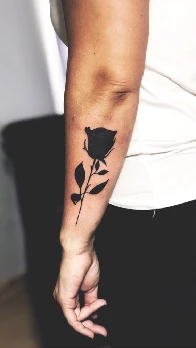
About density, let’s debunk a common myth…
Older tattoos are not always easier to remove than older tattoos, because tattoo age affects the timelines and chances of full removal both ways. It’s true that older tattoos have often faded naturally, and equipment from earlier eras typically deposited less ink than modern machines, But older tattoos also come with complications:
- Ink migrates deeper into the dermis over time
- Pigment spreads and blurs into surrounding tissue
- Those ink particles that remain after years of natural immune activity are often the most resistant ones.
- Some vintage inks also contained metallic compounds that respond poorly to standard wavelengths.
TL;DR: a 20-year-old tattoo may have less total ink, but what's left can be harder to reach and harder to break down.
Cover-up tattoos carry roughly double the ink volume, which means significantly more sessions. The laser has to work through two layers of pigment, and the lower layer is often harder to reach. Tattoos with pre-existing scar tissue from the original work or from a previous removal attempt are also harder and slower to treat.
Previously Treated Tattoos
A tattoo that has already undergone removal attempts is not the same as an untouched tattoo. Previous laser treatments, IPL, removal creams, dermabrasion, or aggressive DIY methods can all change the pigment distribution, create scar tissue, and alter how the skin responds to further treatment. If you've tried another clinic or method and are starting over, your new practitioner needs to know the full treatment history. The remaining ink may behave very differently than a tattoo that has never been treated.
Skin Tone
The challenge with darker skin tones is not simply that removal is slower. It's that melanin in the skin competes with tattoo pigment for laser energy. When the laser fires, melanin in the epidermis absorbs some of that energy before it reaches the ink. This means practitioners need to adjust wavelength selection and energy levels carefully to target the ink while minimizing the risk of hypopigmentation or hyperpigmentation.
A more conservative treatment protocol on darker skin is often the correct protocol. It may look like slower progress, but it's protecting the skin from permanent damage. Patients sometimes interpret conservative treatment as an inexperienced practitioner being too cautious. In most cases, it's the opposite.

Lifestyle and Smoking
Lifestyle factors play a measurable role. Exercise, hydration, sleep, and quitting nicotine are all sensible health practices that support your body's clearance mechanisms. The evidence connecting these habits directly to a predictable reduction in tattoo removal duration is limited, but the biological reasoning is sound: your immune system does the heavy lifting in this process.
The smoking data is the strongest evidence-backed predictor in this category. A study of 352 patients published in JAMA Dermatology found that smokers had significantly lower odds of successful removal after 10 sessions compared to non-smokers (69.7% lower probability of achieving the study's defined clearance endpoint). That specific finding measures the likelihood of reaching a clinical clearance threshold after a set number of treatments, not a percentage reduction in speed. The distinction matters, but the takeaway is the same: smoking meaningfully works against the removal process.
Why Does Tattoo Removal Seem to Stop Working After a Few Sessions?
Tattoo removal commonly appears to stop working after the first several sessions because the remaining pigment becomes progressively harder to target. This is a normal pattern, not a treatment failure. The early sessions clear the most accessible ink. What's left is typically more resistant, more sparsely distributed, or less responsive to the laser wavelength being used.
Most people experience a predictable arc. Sessions one and two produce a dramatic skin reaction. Sessions three through five show strong, visible fading. Then later sessions seem to produce less and less visible change. This plateau is one of the most common reasons people abandon treatment or lose confidence in their clinic.
The explanation is straightforward. The ink that responds best to the laser clears first. The pigment that remains may be chemically different, located in tissue that has scarred from previous treatments, distributed too sparsely for the laser to efficiently target, or simply a color that doesn't absorb the wavelength well. Each of these factors makes the next increment of clearance harder than the last.
A plateau doesn't automatically mean something is wrong, but it does mean the treatment strategy should be reassessed. A good practitioner will adjust their approach as a tattoo changes. That might mean switching wavelengths, modifying energy settings, extending the interval between sessions, or having a direct conversation with you about whether additional treatment is worth the diminishing returns.
Here's when you should be concerned:
- You've seen virtually no fading after multiple properly spaced treatments.
- The clinic never changes its treatment approach despite poor response.
- You experience persistent significant side effects.
- The clinic can't explain which pigment it's targeting or why.
- There's no meaningful photographic documentation of your progress.
- The clinic continues selling sessions without reassessing your tattoo.
- Treatment intervals are being shortened simply to fit more appointments in.
If any of these apply, seek a second opinion. A plateau is normal. A clinic that doesn't acknowledge or adapt to one is a red flag.
When Should You Consider Stopping Treatment?
You should consider stopping treatment when the remaining pigment is so faint that additional sessions carry more risk than benefit. At some point, the question shifts from "how many more sessions can I buy?" to "is another treatment actually worth it?"
This is the concept of diminishing returns applied to your skin. A patient may have 95% fading, a tiny amount of resistant pigment, and increasing risk of pigmentation changes with each additional session. The practical benefit of going from 95% to 97% clearance may not justify the cost, time, and skin damage.
A responsible practitioner will have this conversation with you. If yours hasn't, bring it up. Ask what realistic improvement the next session can deliver and whether the remaining pigment is likely to respond at all. "More sessions" is not always the right answer.
Fading for a Cover-Up vs. Full Removal: Two Different Timelines
Most people researching tattoo removal timelines assume they need to erase their tattoo completely. But the reality is different. Several tattoo removal clinics confirmed that over 80% of their clients are fading for a cover-up, not pursuing full removal. That changes the math significantly.
Cover-up fading typically requires 2 to 5 sessions instead of 10 to 12+. You're lightening the existing tattoo enough for a tattoo artist to design over it, not eliminating every trace of pigment. That cuts the total timeline from years to months.
| Goal | Typical Sessions | Calendar Time |
|---|---|---|
| Cover-up fading | 2-5 | 4-10 months |
| Full removal | 10-12+ | 3+ years |
The spacing between sessions can also differ. Cover-ups and special cases sometimes need 12 to 24+ weeks between treatments, which stretches the calendar even if the session count is low.
How much fading you actually need depends on more than just the old tattoo. It depends on the new design, the placement, the colors your artist plans to use, the size of the cover-up relative to the original, and whether the artist can incorporate parts of the old tattoo into the new one. A skilled tattoo artist may need far less fading than you assume.
If you're considering a cover-up, your first step is a conversation with both a removal specialist and a tattoo artist. The removal specialist determines how many sessions you'll need to lighten the tattoo sufficiently. The tattoo artist advises on what designs work over the faded result. Browse our before-and-after gallery to see real examples of fading results at different session counts.
Knowing which path you're on matters before your first appointment. It sets your expectations, your budget, and your calendar. Full removal and cover-up fading are two entirely different commitments.
Do Picosecond Lasers Remove Tattoos Actually Faster?
Picosecond lasers can reduce sessions by roughly 30 to 40% for black ink compared to older Q-switched lasers, but the clinical evidence that picoseconds are always better is weaker than the marketing gimmicks suggest. A pooled analysis of 21 studies and 971 total patients found only borderline statistical improvement across all tattoo types, and the advantage shrinks for colored tattoos.
The marketing around picosecond lasers is aggressive. Clinics often advertise them as a breakthrough that dramatically cuts treatment time. The reality is more nuanced.
For black tattoos specifically, the data is encouraging. Retrospective comparisons show picosecond devices typically need 4 to 6 sessions versus 6 to 10 for Q-switched lasers. A 2024 prospective study of 20 patients using picosecond Nd:YAG achieved 61% mean clearance after just 2 sessions, with 40% of patients showing excellent improvement.
But zoom out to all tattoo types and colors, and the picture shifts. A systematic review of 971 patients found that picosecond lasers showed only borderline superiority over Q-switched devices (P = 0.05). The consistent advantages were lower pain and fewer side effects, not dramatic speed gains across the board.
One critical point the marketing leaves out: the laser isn't the treatment. The treatment is the practitioner's protocol. Two clinics can own the same device and produce very different outcomes based on how they select wavelengths, adjust energy levels, read the skin's response, and modify their approach as the tattoo changes. The device matters, but the person operating it matters more.
For more on specific devices, see our breakdown of PicoWay tattoo removal.
What Does the Completion Data Actually Say?
Here's the part no clinic brochure leads with. Full removal doesn't mean 100% of the ink is gone. In practice, "complete removal" means 90 to 95% of the pigment has cleared. But even that definition requires context.
There are three different ways to define "done," and they lead to very different expectations.
Clinical clearance is what a study defines as successful removal. It's typically measured by blinded observers rating standardized photographs against a clearance scale. When a study says a tattoo was "completely removed," it means a clinician assessed it as 90 to 95% clear.
Visual clearance is what an ordinary person sees. Some patients with 90% clinical clearance feel their tattoo is obviously still visible. Others with 85% clearance consider it effectively gone because the remaining traces are faint enough to ignore at normal viewing distance.
Practical clearance is whether the remaining pigment matters for the patient's goal. Someone fading for a cover-up may consider the tattoo "done" at 70%. Someone who wants completely untouched-looking skin may never feel satisfied, even at 95%.
The most rigorous study on completion rates, published in JAMA Dermatology and covering 352 patients treated over 15 years, found:
- 47.2% of tattoos reached clinical clearance after 10 sessions
- 74.8% reached it after 15 sessions
- Smokers had significantly lower odds of clearance (69.7% lower probability)
- Non-black/red ink tattoos had a 79.5% lower chance of clearance
Our own data lines up with this: only 38 to 47% of people achieve what clinics call "complete removal."
The remaining traces after treatment are not always residual ink. What people call "ghosting" can involve several things: leftover pigment, altered skin texture, hypopigmentation or hyperpigmentation, scar tissue, or changes in the skin's optical properties. A faint mark that remains after treatment may not be removable tattoo pigment at all. This also connects to the FDA's direct statement that complete removal without scarring "may be impossible."
None of this means tattoo removal doesn't work. It means the goal should be realistic. For most people, significant fading is achievable and a 90 to 95% result is often hard to spot unless you're looking for it. Large, heavily saturated tattoos (bigger than a sheet of paper) may not be realistic candidates for full removal. But significant visible improvement is the norm, not the exception. For more data on outcomes, see can you completely remove a tattoo?
What Should You Ask a Clinic Before Starting Treatment?
You should ask your clinic specific questions about their treatment approach, expected outcomes, and how they handle complications. The answers will tell you more about the quality of your care than the brand of laser on the wall.
A well-prepared consultation covers more than "how many sessions will I need." It should give you a clear picture of the practitioner's clinical thinking, their experience with tattoos like yours, and how they plan to adapt if your tattoo doesn't respond as expected.
Before committing to a treatment plan, ask:
- What wavelength will you use for each color in my tattoo?
- What makes you confident my tattoo will respond to that wavelength?
- What percentage of similar tattoos do you typically clear, and how are you measuring that?
- How will you track my progress between sessions?
- What happens if my tattoo stops responding or plateaus?
- How long will you wait between my treatments, and what determines that interval?
- What happens if I develop pigmentation changes or scarring?
- Do you treat tattoos with white, flesh-colored, or cosmetic pigment? (If applicable.)
- Have you treated previously lasered tattoos? (If applicable.)
- At what point would you recommend I stop treatment?
The answers themselves matter less than whether the practitioner can give them clearly and without hesitation. A clinic that deflects these questions or answers only with marketing language is telling you something.
The Bottom Line
Tattoo removal is a commitment measured in years, not weeks. Here are the numbers that matter:
Plan for 10 to 12 sessions over 3 or more years for full removal. If you're fading for a cover-up, you'll need 2 to 5 sessions over several months instead. Either way, the waiting between sessions is the process, not a delay. Your body is doing the real work during those weeks.
Know your factors. Ink color, pigment type, body location, tattoo age, skin tone, previous treatments, and your overall health all shift the timeline. Understand that "done" can mean different things: clinical clearance measured by a scale, visual clearance as you see it, or practical clearance for your specific goal. And if your goal is a cover-up, you may be closer to finishing than you think.
Expect a plateau. The early sessions typically produce the most dramatic results. Later sessions target harder pigment with diminishing returns. That's normal biology, not a sign of failure. But if your clinic never reassesses or adjusts its approach, get a second opinion.
The best time to start is now. Use our cost calculator to estimate your total investment, browse real before-and-after results, or find a clinic near you. Every session is measurable progress.
Frequently Asked Questions
Why do some clinics pause tattoo removal during summer months?
Clinics pause laser tattoo removal in summer because tanned skin absorbs excess laser energy, and this increases the risk of blistering, permanent hypopigmentation, and scarring. When ultraviolet light stimulates melanin production, the laser struggles to distinguish between your skin's natural pigment and the ink. If you plan treatments around sunny vacations or summer months, factor in mandatory 4 to 6-week strict sun-avoidance windows before and after each visit.
Does working out right after a laser session help flush the ink faster?
Working out immediately after a laser session does not speed up ink removal and actually increases your risk of severe blistering and infection due to trapped sweat and elevated body heat. Heat and friction in the first 48 hours irritate the treated skin. You should rest for two full days after an appointment before resuming workouts to keep your healing timeline on track.
Can multi-pass methods like the R0 technique remove my tattoo faster?
There is little to no evidence that multi-pass techniques like the R20 Method (ART) can speed up tattoo removal more than a single pass with an appropriately powered picosecond or Q-switch laser. There are however a lot of case studies of these methods causing scarring, blistering, swelling, and other side effects. And it comes at 3x the cost of a single pass. Not worth it. (We don't feature clinics using these methods for this reason.)
What is tattoo 'frosting' after a laser treatment, and how long does it take to disappear?
Tattoo 'frosting' is a temporary, harmless release of microscopic steam and carbon dioxide bubbles in the upper skin layers that resolves within 15 to 30 minutes. While this sudden chalky white effect indicates that the laser successfully fractured ink particles, it is not actual ink fading. You will start seeing the ink fading gradually over the following 8 to 12 weeks as white blood cells transport shattered pigment through your lymphatic system.
Should my next appointment be delayed because of severe blistering after a session?
Yes, in case of severe blistering or lingering epidermal damage your next appointment should be delayed, since laser treatments should never be performed on unhealed skin. That would significantly increase the risk of permanent texture changes and scarring, forcing your technician to extend your inter-session wait from 8 weeks to 12 or 16 weeks. To estimate how potential healing delays impact your total commitment, plug your details into our cost calculator.